A leopard logo and a shiny, yellow paint scheme. The first Pennzoil sponsored team and the rise of Michael Waltrip.
The 90s NASCAR surge fueled come-up stories, but it wouldn’t be the same without Dick Bahre and Bahari Racing.
Bahari’s Beginning
Before “Bahari Racing” Richard “Dick” Bahre used his racing expertise to start a team in 1981. Bahre came from a racing family. He was the brother of the late New England racing legend Bob Bahre who owned New Hampshire Motor Speedway. According to Dick’s obituary in 2008, he was Bob’s track manager at Oakford Plains Speedway and helped him build NHMS.
There isn’t explicit information to say how Bahre got the money to start his race team, but it was enough to fund it part-time. However, it wasn’t until the late 80s that 2 others joined as co-owners.
Chuck Rider, an automotive businessman from Carlisle, PA, brought business acumen to the team. Rider graduated from Catawba College in 1958 and climbed the ranks in the automotive parts industry—eventually becoming president of Automotive Electric Associates. AEA became one of the most successful auto parts warehouses in the nation.
This was before the LinkedIn era, but this article summarizes that Rider’s business partner Lowrance Harry was involved in building AEA. After sponsorship ventures at Charlotte Motor Speedway, the business titans partnered with Dick Bahre.
And thus, Bahari Racing was born. Not from the rainforest but from the 2 letters of each of their last names BA, HA, and RI.
Michael Waltrip and the Pennzoil Era
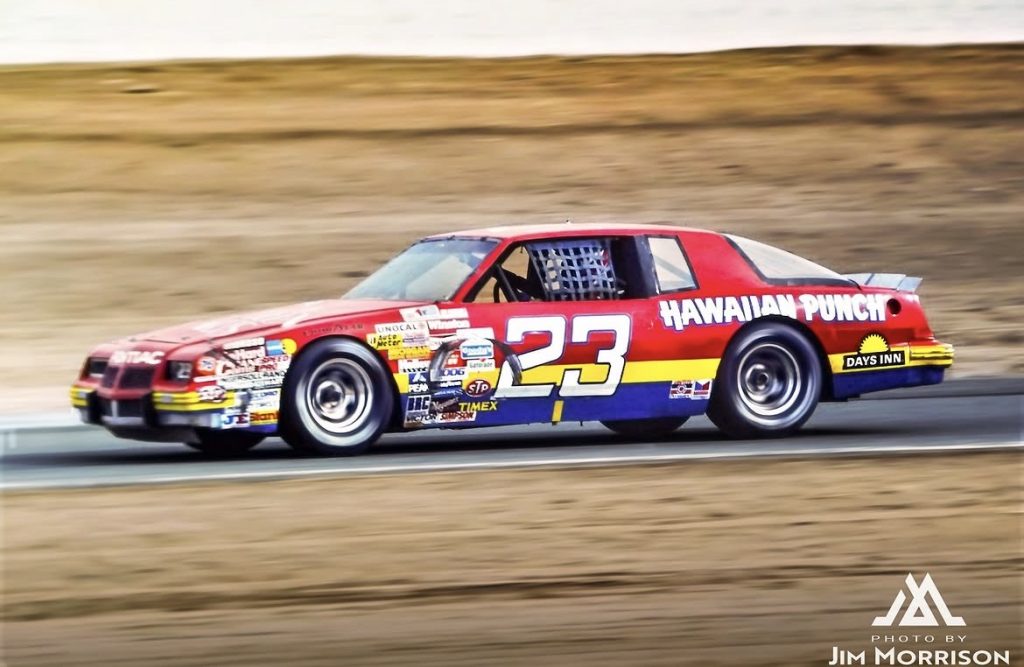
Before the North Carolina businessmen claimed partial ownership, Dick Bahre made a bet on the young Michael Waltrip. Bahre gave Waltrip his first NASCAR cup series start in the #23 car.
Waltrip may never have made it as far as he did in his career if it wasn’t for that decision.
By 1991, he was running the first-ever Pennzoil sponsored car. Pennzoil benefitted from the rise of ‘90s NASCAR and more than likely contributed to their household name.
35 years later, the oil company still supports NASCAR with Team Penske and often seen on the hoods of the #12 and #22.
Waltrip looks back at the Bahre family as the people who gave him his first chance. In 2008, he even dedicated a decal on his own race team at New Hampshire Motor Speedway to honor the Bahre family.
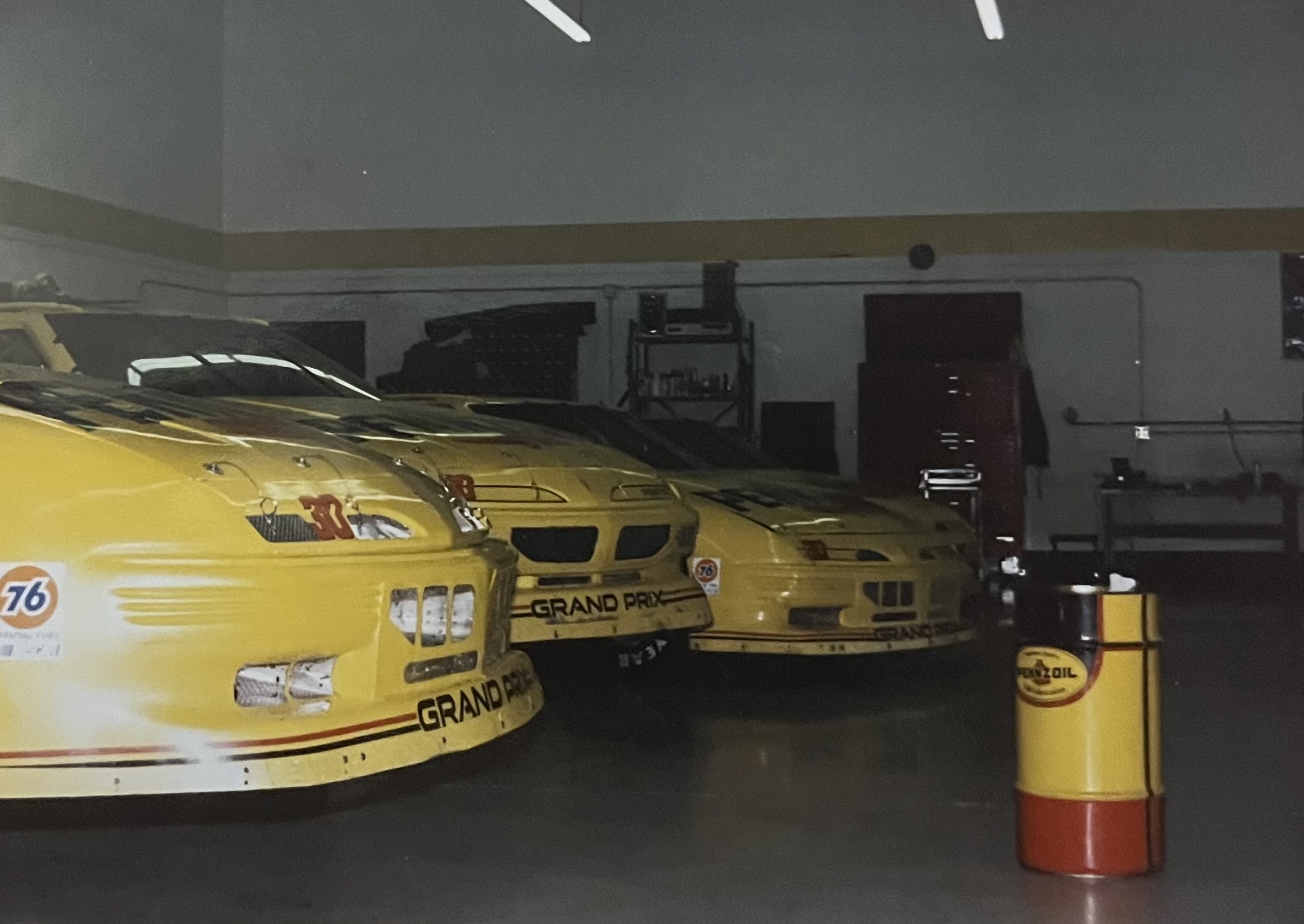
By 1996, Bahari believed they captured lighting in a bottle with Johnny Benson Jr. He hit the cup series in the neon, yellow #30 Pontiac Grand Prix like a force and captured the Rookie of the Year award. The following year he earned 8 top-tens and a pole at Michigan.
Everything looked like it was heading in the right direction until Benson left the organization. He chose to leave Bahari and join Roush Racing.
The One-Car Bet
Today, NASCAR’s power-house teams have at least 3 cars. Just look at Joe Gibbs Racing and 23XI. Besides sharing the top manufacturer, they’re also working together to get the data they need to have a competitive advantage.
That wasn’t the mindset for Bahari.
Chuck Rider said in 1997, “Proponents say the advantages are the additional test dates and information sharing, but I’m skeptical. It seems that an owner would have a difficult time convincing two engine builders, or two crew chiefs to share specific, detailed information. Each of those individuals want to be the best and that may mean keeping secrets that set themselves above the other guy.”
That’s a totally different story than today’s NASCAR. In July 2026, Brad Keslowski used the media to put pressure on Ford to work together to get more competitive.
Bahari stayed true to their one-car mission and tried to rally around their new driver in 1998. Derrike Cope joined the team after being the inaugural driver for MB2 Motorsports.
The departure of Pennzoil must have significantly affected the financial backing of Bahari Racing. The team was left with Gumout as their main sponsor. At the time, Gumout was owned by Pennzoil but less flashy than the notable bell design. That sponsor only lasted for one season until ‘99 when Cope returned with a Sara Lee sponsor.
Selling the Team
The ascension of Bahari from 1991 to 1997 is a head-scratcher. The team fielded Darrell Waltrip’s brother for the first time, got the first Pennzoil Sponsor, and had a Rookie of the Year driver.
At the end of the day, you need money to be successful in NASCAR. Pennzoil leaving the team looked like it squashed any chance they had to push their success into the 2000s. Maybe the mindset of betting on one sponsor and one driver wasn’t the best business move. The irony is that Bahre needed the businessmen to come in and grow his racing team into a true contender.
The final years of Bahari were less than ideal with Cope at the wheel. In 1999, they sold the team to businessman Jack Birmingham.
When the deal happened, Bahari accumulated over $7.5 million in earnings since 1991. The biggest “What if” is Pennzoil.
What if Pennzoil didn’t follow Johnny Benson? The earnings and sponsorship money might not have dried up.
What if they decided to be more than just a one-car team?
Racing is about taking bets.
An owner has to ask themselves, do I have the right equipment? The best engineers? The most talented driver?
If one of those things isn’t working, the others have to pick up the slack. It’s one person behind the wheel, but it’s still a team sport.
It didn’t work out for Bahari, but that’s what makes history interesting. NASCAR isn’t what it is without the small teams betting on themselves.